
Queens in the Kingdom: Reclaiming Our Divine Partnership
By Terri Sullivant
I am writing this because something has begun to stir in my heart again—something I had quietly set aside for a long time. It feels like hope. Not the naïve kind, and not the kind that ignores pain, but a cautious, hard-won hope that there might be a better way for men and women to partner together in the Church and in God’s Kingdom.
For many years, I learned how to live without that hope. Disappointment has a sharp sting, and after being wounded more than once, it felt safer to settle into what is rather than risk longing for what could be. Resignation can masquerade as wisdom. If you don’t hope, you can’t be disappointed. And yet, something in me has begun to awaken again—an invitation from the Holy Spirit to believe that God’s original design is not only good, but still accessible.
This reflection comes from that place: a place of tenderness, memory, and renewed courage. It is shaped by both the pain of the past and a growing sense that God is gently calling His people—men and women alike—into a more beautiful, mutual, and life-giving partnership than many of us have known.
Before going further, I want to clarify something important about the language I use here.
When I speak of women as queens in God’s Kingdom, I am not talking about ruling over the Church or over anyone else. This is not about grasping for power, position, or control. It is about a way of seeing and a way of being.
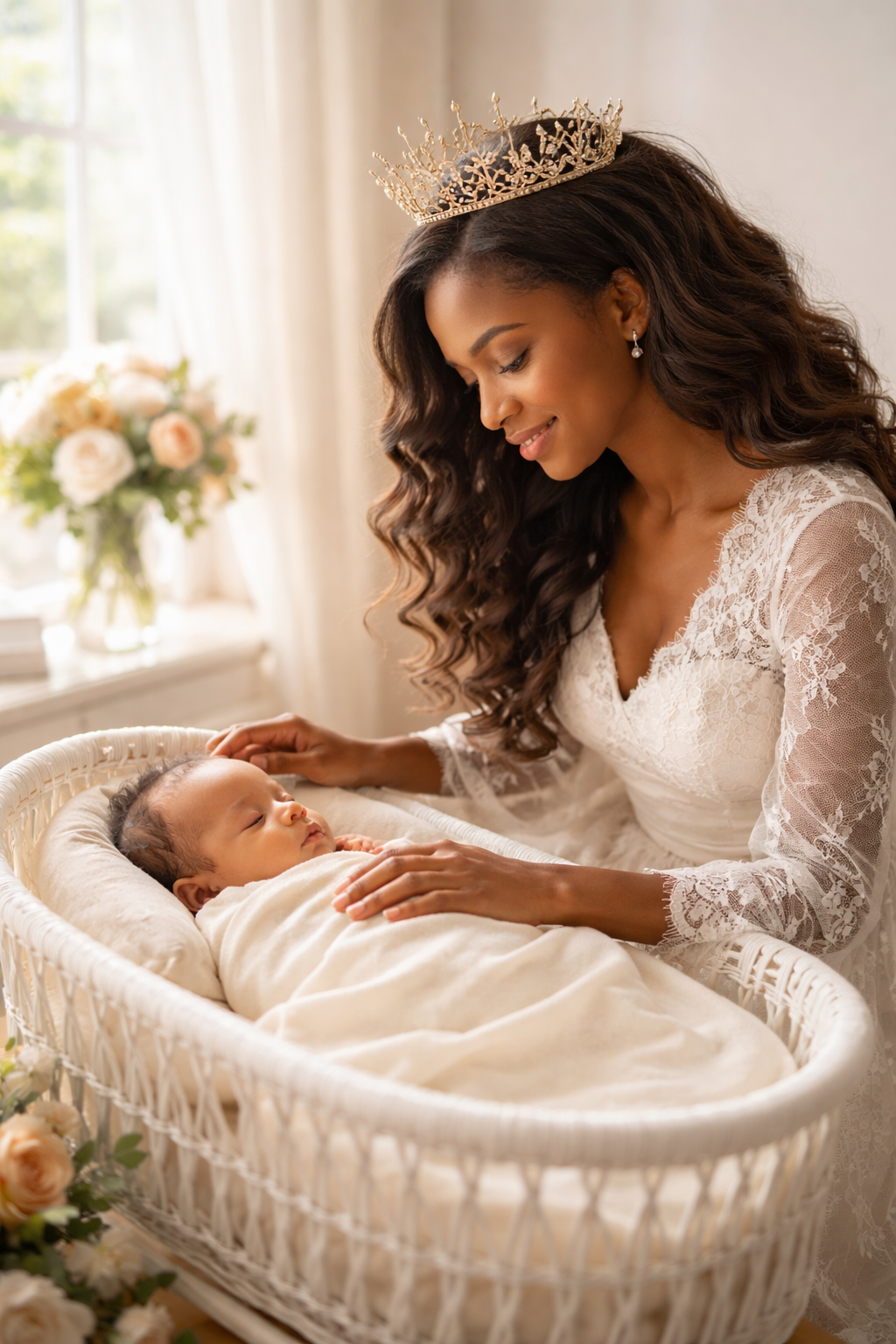
If God is our Father—and He is the King of the universe—then we are, by definition, royal daughters. Queens by inheritance, not by achievement. This identity shapes how we carry ourselves in the world: not as those who dominate, but as those who represent. Queens in the Kingdom are ambassadors of love, not lovers of power.
To be a queen in this sense is to live as an emissary of the Father’s heart—bringing His presence, His tenderness, and His authority expressed through love into every sphere we inhabit. This applies to how we show up as mothers, both natural and spiritual, in our families and in the family of God. It is a calling rooted not in control, but in communion; not in status, but in belovedness.
It is through this lens that I want everything that follows to be read.
My Story
I came to faith in Jesus during the Jesus Movement of the 1970s, in the middle of a profound cultural upheaval. Traditional norms were being questioned, reexamined, and in many cases, dismantled. The women’s liberation movement was reshaping the social landscape, and like many others, I was searching for truth, belonging, and purpose.
I was full of hope and joy when I encountered Christ in 1977 and soon after became a campus leader in a vibrant Christian movement,. At that time, I had no awareness of the historical patterns of patriarchy woven into much of the Church’s theology and practice. But I would soon come face-to-face with them.
After college, I married a pastor. I entered married life with the full expectation that we would be partners—not only in life but also in ministry. Together, we had experienced a spiritual environment that celebrated the gifts of both men and women. I naturally assumed that vision would continue.
Soon after we began our ministry journey in a church in Arkansas, however, I encountered something that took me by surprise. The lead pastor, under whose mentorship we served, held to a deeply hierarchical view of men and women. He taught that women were inherently more prone to deception because Eve was the first to take the forbidden fruit. In this interpretation, Eve was presented as the primary cause of the fall of humanity, while Adam’s failure to protect, speak, or lead was largely overlooked.
Women in that community were discouraged from holding leadership positions, especially in public or spiritual roles. The pastor’s own wife had no voice in church matters. Women’s gifts were confined to supporting their husbands and raising families. These teachings were presented as “divine order,” yet in practice they granted men authority while silencing or sidelining women.
I was stunned—and quietly grieved. The environment felt constricting and foreign from what I had known in my early days of faith.
Because my husband, Michael, was part of that leadership circle, this season was especially painful. What we were encountering did not reflect what we had shared together earlier in our spiritual formation. Over time, through many honest conversations, prayer, and wrestling, we returned to these questions again and again. Michael listened deeply. He grew. We grew.
I want to say clearly how deeply grateful I am for the way my husband has come into unity and partnership with me over the years. Together, we have worked through the impact of our historic experiences, naming what was harmful and learning a different way. What has emerged is a strong, mutual partnership—one rooted in shared discernment, respect, and a growing confidence in God’s design for men and women to walk side by side.
After three years, we chose to leave that environment and joined another spiritual community that, while still imperfect, was far more open and honoring.
Still, I noticed something deeper. Even in churches that did not explicitly teach female subordination, male leadership remained the norm. Women’s voices were often absent from positions of influence, and their contributions remained largely unseen.
Over the years, I’ve come to see that many churches—often unintentionally—still carry residual beliefs and structures that limit the flourishing of women as full image-bearers and ambassadors of God’s love. Yet I also sense that something is shifting.
Recovering God’s Original Heart
1 Peter 2:9 reminds us:
“But you are a chosen race, a royal priesthood, a holy nation, a people for His own possession, that you may proclaim the excellencies of Him who called you out of darkness into His marvelous light.”
This royal priesthood includes both men and women. We are co-heirs. Co-regents. God’s design was never about hierarchy—it was about shared stewardship, mutual dignity, and relational authority expressed through love.
From the beginning, God’s Kingdom was meant to be tended by both male and female image-bearers, ruling together not through dominance, but through devotion. His Kingdom is not only a realm, but a family—one that thrives when mothers and fathers, daughters and sons, show up as loving representatives of the Father’s heart.
I believe it is time for queens to rise—not in competition with kings, but in partnership with them. This rising is not about claiming power, but about embodying love with courage and clarity.
Living as Royal Ambassadors
Here are some ways the Spirit has been gently forming this vision in me:
Returning to Hope
There was a season when I told myself, This is just how it is. I laid down hope as a way of protecting my heart. But now, I sense God inviting me—and perhaps many of us—to hope again. Not recklessly, but faithfully.
The restoration of God’s design for women is not about cultural battles or political power. It is about becoming who we already are: sons and daughters, kings and queens, royal ambassadors of love in a world that desperately needs it.
And perhaps this renewed hope stirring in my heart is itself a sign that God is not finished yet.
A Word of Legacy
As I reflect on the authority entrusted to women—especially through motherhood—I’m reminded of these words by William Ross Wallace, written in the 19th century yet still resonant today:
Blessings on the hand of women!
Angels guard its strength and grace…
For the hand that rocks the cradle
Is the hand that rules the world.
Benediction
May the Holy Spirit restore to women their God-given authority, tenderness, and strength.
May we—men and women together—learn to reign through love, humility, and holy partnership.
And may the Church become a place where all God’s children rise into the full dignity of who they were created to be.
Author’s Note
If the word queen feels unfamiliar or uncomfortable, I invite you to read it simply as a metaphor for beloved identity and sacred responsibility. This language is not about power over others, but about living from a place of belonging—representing the heart of a good Father as His sons and daughters in the world.
Many blessings to you and yours,
Terri